Introduction
For most homeowners, a roof replacement is a once-in-a-generation investment. However, a troubling trend in the residential construction industry reveals a massive disparity in roof longevity: while some systems fail at the 15-year mark, others remain structurally sound for 30, 40, or even 50 years. Understanding Why Some Roofs Last 15 Years and Others Last 30+ is not merely a matter of curiosity; it is a critical financial consideration that can save a property owner tens of thousands of dollars in premature replacement costs and secondary water damage repairs. The lifespan of a roofing system is determined by a complex interplay of material science, engineering precision, environmental variables, and proactive maintenance. In this deep-dive analysis, we will explore the technical reasons behind these lifespan gaps and provide an authoritative guide on how to ensure your roof reaches its maximum potential durability.
The Foundation of Longevity: Material Selection
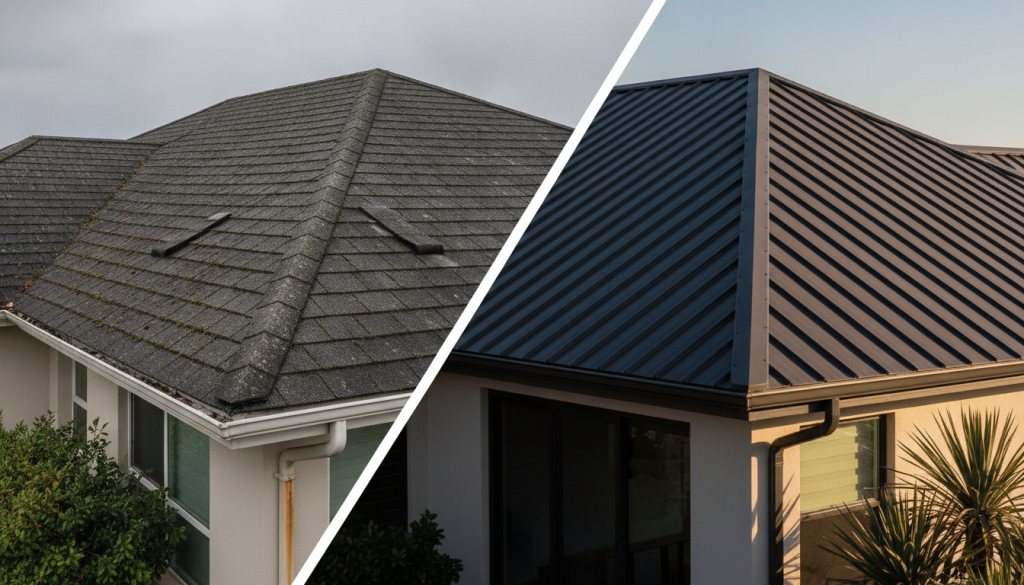
The most immediate factor in determining whether a roof will last 15 or 30 years is the chemical and physical composition of the materials used. Not all shingles are created equal, even if they appear similar from the ground. Traditional 3-tab asphalt shingles are the entry-level standard, typically consisting of a single layer of asphalt-saturated fiberglass. These materials are thin and prone to ‘cupping’ or ‘clawing’ as the asphalt volatiles evaporate over time. In contrast, architectural or ‘laminated’ shingles are composed of two or more layers of material bonded with high-grade adhesive. This added thickness provides significantly better resistance to wind uplift and impact damage.
The Role of Bitumen Quality and Granule Adhesion
High-quality roofing manufacturers use polymer-modified bitumen, which incorporates synthetic rubbers like SBS (Styrene-Butadiene-Styrene). This modification allows the shingle to remain flexible in freezing temperatures and resistant to flow in extreme heat. Furthermore, the longevity of a shingle is directly tied to its ceramic granule coating. These granules are the roof’s primary defense against Ultraviolet (UV) radiation. A roof that lasts 30+ years typically features superior granule adhesion, preventing the underlying asphalt from being baked by the sun, which leads to brittleness and cracking.
The ‘Human Factor’: Installation Precision
Even the highest-quality materials will fail in 15 years if the installation is flawed. Roofing is a precision trade where small errors lead to systemic failure. One of the most common reasons for premature roof failure is ‘high-nailing.’ Shingles have a specific ‘nailing zone’ where the fastener must penetrate both layers of a laminated shingle to secure it properly. If a contractor nails above this zone, the shingle is only held by a single layer, making it susceptible to sliding out or being blown off by moderate winds.
Flashing and Water Management
A roof’s primary job is to shed water, but the most vulnerable points are the ‘penetrations’—chimneys, skylights, vents, and valleys. A 30-year roof utilizes high-quality metal flashing (often copper or heavy-gauge aluminum) and specialized underlayments like ice and water shields. Lower-quality installations often rely on ‘caulk-and-walk’ methods, using sealants instead of proper metal counter-flashing. While sealant works for a few years, it eventually dries and cracks, leading to leaks that rot the roof deck long before the shingles themselves have worn out.
The ‘Lungs’ of the House: Attic Ventilation
Perhaps the most overlooked factor in the Why Some Roofs Last 15 Years and Others Last 30+ debate is attic ventilation. A roof is part of a holistic system. Without proper intake (at the soffits) and exhaust (at the ridge), heat and moisture become trapped in the attic. In the summer, an unventilated attic can reach temperatures exceeding 150 degrees Fahrenheit. This extreme heat literally ‘cooks’ the shingles from the underside, causing the asphalt to degrade at double the normal rate. In the winter, trapped moisture can lead to mold growth and wood rot in the decking. A roof that lasts 30+ years is almost always supported by a balanced ventilation system that maintains a consistent temperature between the attic and the outdoor environment.
Environmental Stressors and Thermal Shock
Geography plays a significant role in roof lifespan. Homes in regions with high ‘thermal shock’—where temperatures swing 40 or 50 degrees in a single day—experience constant expansion and contraction of roofing materials. This mechanical stress can cause fasteners to back out and shingles to tear. Furthermore, roofs in high-UV environments (like the Sun Belt) or high-salt environments (coastal areas) require specific material adaptations. A 30-year roof in these areas is often achieved through the use of metal roofing or specialized UV-resistant coatings that are not standard on basic 15-year systems.
Informative Comparison: Roof Material Performance
The following table illustrates the typical performance metrics for various roofing systems based on industry averages and proper installation.
- 3-Tab Asphalt Shingles: Expected Life: 12-18 Years | Wind Resistance: 60 MPH | Cost: Low
- Architectural Shingles: Expected Life: 24-30 Years | Wind Resistance: 110-130 MPH | Cost: Moderate
- Standing Seam Metal: Expected Life: 50+ Years | Wind Resistance: 140+ MPH | Cost: High
- Slate or Clay Tile: Expected Life: 75-100 Years | Wind Resistance: High | Cost: Very High
The Importance of Proactive Maintenance
The difference between a 15-year roof and a 30-year roof often comes down to what happens after the installers leave. A roof is a dynamic system exposed to the elements 24/7. Small issues, such as a clogged gutter causing water to back up under the eave or a limb rubbing against shingles, can accelerate wear exponentially. 30-year roofs are typically those that receive biennial inspections. Removing moss and lichen is particularly important, as these organisms hold moisture against the shingle surface and secrete acids that dissolve the limestone filler in the asphalt.
Frequently Asked Questions
1. Can I extend the life of my current 15-year roof?
Yes, by ensuring your attic ventilation is up to code and keeping the surface free of debris and organic growth, you can often squeeze a few extra years out of a budget system, though it will never match the inherent durability of a premium system.
2. Why is architectural shingle better than 3-tab?
Architectural shingles are thicker, multi-layered, and have a much stronger adhesive strip. This makes them significantly more resistant to wind uplift and prevents the ‘curling’ common in thinner 3-tab shingles.
3. Does a ‘Lifetime Warranty’ mean the roof will last forever?
No. Most ‘Lifetime’ warranties are pro-rated and only cover manufacturing defects, not natural wear and tear or environmental damage. A 30-year lifespan is a physical reality of the material, not a legal guarantee.
4. How does dark vs. light color affect roof life?
Darker roofs absorb more heat, which can lead to higher surface temperatures. In hot climates, lighter-colored ‘cool roofs’ can last longer by reducing thermal stress and UV absorption.
5. Is a metal roof always better than asphalt?
From a pure longevity standpoint, yes. Metal roofs easily last 50+ years. However, they require a higher upfront investment and must be installed by specialists to avoid issues with expansion and contraction noise.
Conclusion
The disparity in roofing lifespans is rarely a matter of luck. When we analyze Why Some Roofs Last 15 Years and Others Last 30+, the evidence points toward three pillars: material quality, installation integrity, and systemic health (ventilation). For a homeowner, the goal should be to move away from the ‘commodity’ mindset of roofing and toward a ‘system’ mindset. By investing in architectural-grade materials, hiring certified master contractors who prioritize flashing and ventilation, and committing to basic annual maintenance, a 30-year roof becomes the standard rather than the exception. Protecting your home starts with the realization that the cheapest roof today is almost always the most expensive roof over the long term.