Introduction
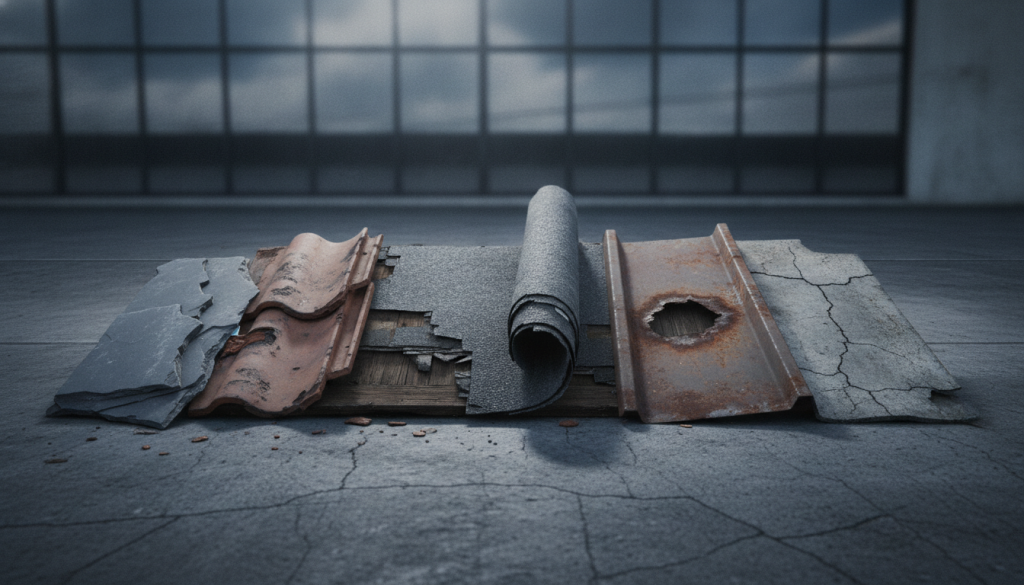
A roof is more than just a covering; it is a complex engineering system designed to protect a building’s structural integrity, its inhabitants, and its contents. However, no roofing system is permanent. While some materials are engineered to last 20 years and others for over a century, they all eventually succumb to environmental stressors, chemical degradation, and physical wear. Understanding What Causes Different Roofing Systems to Fail? A Material-by-Material Breakdown is essential for property owners, facility managers, and developers who wish to maximize their investment and prevent catastrophic structural damage. In recent years, the roofing industry has seen a shift toward more resilient materials, yet the fundamentals of failure remain consistent: moisture infiltration, thermal movement, and human error during installation. This comprehensive guide explores the specific vulnerabilities of the most common roofing materials used in modern construction.
The Anatomy of Failure: Why Roofs Give Out
Before diving into specific materials, it is important to distinguish between ‘design life’ and ‘service life.’ Design life is the theoretical duration a manufacturer expects a product to last under ideal conditions. Service life is the actual time a roof remains functional. Failure occurs when the service life is cut short by external or internal factors. The primary drivers of roofing failure include UV radiation, which breaks down chemical bonds; thermal shock, which causes materials to expand and contract rapidly; and mechanical damage from wind, hail, or foot traffic. Furthermore, the interplay between the roofing material and the underlying structure—such as ventilation and insulation—plays a critical role in the system’s longevity.
Asphalt Shingle Roofing: The Vulnerabilities of the Most Common Material
Asphalt shingles are the most prevalent roofing material in North America due to their cost-effectiveness and ease of installation. However, they are also among the most susceptible to environmental degradation.
Granule Loss and UV Degradation
The ceramic-coated granules on asphalt shingles serve a dual purpose: they provide color and, more importantly, they protect the underlying bitumen (asphalt) from ultraviolet rays. Over time, the bond between the granules and the asphalt weakens. Once granules are lost, the asphalt is exposed to the sun, causing it to dry out, become brittle, and crack. This process, known as ‘volatilization,’ removes the oils that keep the shingle flexible.
Thermal Shock and Curling
Asphalt shingles are prone to thermal shock. On a hot summer day, roof temperatures can exceed 150 degrees Fahrenheit, only to drop rapidly during a rainstorm or at night. This rapid contraction causes the shingles to curl at the edges or ‘fishmouth’ in the center. Once a shingle curls, it becomes a catch-point for wind, leading to shingle blow-offs and water infiltration.
Improper Nailing and High Winds
A significant percentage of asphalt shingle failures are rooted in ‘high-nailing.’ If nails are driven above the designated nail line, they do not penetrate the common bond of the shingle below. This significantly reduces the roof’s wind resistance, leading to entire sections of shingles being stripped away during moderate storms.
Metal Roofing Systems: When Durability Meets Physical Realities
Metal roofing is prized for its longevity, often lasting 40 to 70 years. However, even these robust systems have specific failure points that can lead to premature replacement.
Fastener Back-out and Gasket Failure
In exposed-fastener metal roofs, the screws are the weakest link. Because metal expands and contracts significantly with temperature changes, the movement can slowly ‘back out’ the screws. Additionally, the neoprene or EPDM gaskets used to seal the screw holes eventually dry out and crack due to UV exposure, creating thousands of tiny entry points for water.
Galvanic Corrosion
Failure often occurs when two dissimilar metals come into contact in the presence of an electrolyte (like rainwater). For example, using copper flashing with a galvalume roof will cause a chemical reaction that rapidly eats through the metal. This is a common mistake in complex architectural designs where multiple metal types are utilized.
Oil Canning
While often considered an aesthetic issue, severe ‘oil canning’—the visible waviness in the flat areas of metal panels—can lead to structural stress. It is caused by over-tightened fasteners or an uneven roof deck, which prevents the metal from expanding naturally, eventually leading to stress fractures at the seams.
Tile Roofing (Clay and Concrete): The Underlayment Paradox
Tile roofs are famous for lasting over 100 years, yet the ‘system’ often fails much sooner. The primary reason for this is the disparity between the lifespan of the tile and the lifespan of the underlayment.
Underlayment Degradation
While the clay or concrete tiles are nearly impervious to the elements, the felt or synthetic underlayment beneath them typically lasts only 20 to 30 years. Once the underlayment becomes brittle and cracks, water that naturally migrates under the tiles will reach the wooden roof deck, causing rot despite the tiles looking perfectly intact from the street.
Debris Accumulation and ‘Dams’
The curved profile of many tiles allows organic debris (leaves, needles, dirt) to collect in the valleys and beneath the tiles. This debris holds moisture against the underlayment and creates ‘dams’ that force water sideways into areas not designed for drainage. Regular maintenance is required to prevent this specific failure mode.
Flat and Low-Slope Systems: TPO, EPDM, and PVC
Commercial and modern residential structures often utilize single-ply membranes. These systems fail differently than sloped roofs, primarily due to the challenges of standing water.
Seam Failure
Single-ply roofs are only as strong as their seams. TPO and PVC are heat-welded, while EPDM uses adhesive tape. Over time, the constant expansion and contraction of the building can pull these seams apart. If the welding was performed at the wrong temperature or the adhesive has reached the end of its chemical life, the seams will delaminate, allowing water to saturate the insulation layer.
Punctures and Mechanical Damage
Because flat roofs are often used to house HVAC equipment, they are subject to foot traffic. Dropped tools, heavy equipment panels, or even birds can puncture the membrane. Once the membrane is breached, water can travel long distances under the surface, making the leak extremely difficult to locate.
Ponding Water
By definition, flat roofs should have a slight pitch to drains. If the building settles or the drains become clogged, ‘ponding water’ occurs. Standing water for more than 48 hours puts immense hydrostatic pressure on seams and can lead to the accelerated breakdown of the membrane material through microbial growth and concentrated UV magnification.
Comparison Table: Failure Modes by Material
| Roofing Material | Expected Lifespan | Primary Cause of Failure | Secondary Cause of Failure |
|---|---|---|---|
| Asphalt Shingles | 15-25 Years | UV Degradation / Granule Loss | Thermal Shock / High Nailing |
| Metal (Standing Seam) | 40-70 Years | Fastener/Sealant Failure | Galvanic Corrosion |
| Clay/Concrete Tile | 50-100 Years | Underlayment Expiration | Cracking from Impact |
| Wood Shakes | 20-30 Years | Rot and Fungal Growth | UV Splitting / Warping |
| TPO/EPDM (Flat) | 15-25 Years | Seam Delamination | Punctures / Ponding Water |
| Slate | 75-150 Years | Flashing Failure | Mechanical Impact / Poor Headlap |
Wood Shakes and Shingles: The Biological Battle
Wood is a natural material, and its failure is almost always biological or moisture-related. Without proper treatment and airflow, wood roofs can fail in as little as 10 years.
Rot and Fungal Growth
Wood shakes must be able to ‘breathe.’ If they are installed over a solid deck without a mesh spacer (like Cedar Breather), moisture gets trapped behind the wood. This creates a breeding ground for moss, lichen, and fungi, which digest the cellulose in the wood, leading to soft spots and eventual holes.
UV Splitting and Warping
Sunlight leaches the natural oils from cedar and redwood. As the wood dries out, it loses its structural integrity. This leads to deep splits and ‘cupping,’ where the edges of the shake lift upward. Cupped shakes are easily broken by wind or hail and allow water to bypass the primary drainage plane.
Universal Factors: The ‘Human Element’ in Roof Failure
Regardless of the material chosen, two factors contribute to the failure of almost every roofing system: Poor Ventilation and Improper Installation.
The Role of Attic Ventilation
A roof is a breathing system. Inadequate ventilation causes heat and moisture to build up in the attic space. In winter, this leads to ice damming; in summer, it ‘bakes’ the roofing material from the inside out. For asphalt shingles, poor ventilation can void the manufacturer’s warranty and cut the lifespan of the roof by 50%.
Installation Errors
Industry data suggests that up to 80% of premature roof failures are the result of poor workmanship rather than material defects. This includes improper flashing around chimneys and skylights, using the wrong type of underlayment, or failing to follow specific manufacturer guidelines for fastening. A high-quality material installed poorly will always underperform a mid-grade material installed with precision.
Frequently Asked Questions
1. What is the most common cause of roof failure across all materials?
Moisture infiltration caused by compromised flashing is the most common universal cause. Flashing is used at the joints and penetrations of a roof, and if it is not sealed or installed correctly, it provides a direct path for water to enter the structure.
2. Can a roof fail even if it isn’t leaking?
Yes. A roof can fail structurally due to ‘silent’ issues like wood rot in the decking or saturated insulation. By the time a leak is visible on a ceiling, the internal components of the roof system have often been failing for months or even years.
3. How does climate affect the failure of different roofing systems?
Climate is a massive factor. High-humidity environments accelerate rot and fungal growth in wood and shingles, while coastal environments with salt air can cause rapid corrosion in certain metal roofing systems. Extreme temperature swings in desert or alpine climates accelerate thermal shock.
4. Is it possible to repair a failing roofing system, or must it be replaced?
It depends on the extent of the failure. If the failure is localized (e.g., a few broken tiles or a single damaged seam on a TPO roof), a repair is often sufficient. However, if the failure is systemic (e.g., widespread granule loss or expired underlayment), a full replacement is usually the most cost-effective long-term solution.
5. How often should a roof be inspected to prevent failure?
Professional inspections should occur at least twice a year—once in the spring and once in the fall—and after any major weather event. This allows for the identification of minor issues like backed-out screws or debris dams before they lead to systemic failure.
Conclusion
Understanding What Causes Different Roofing Systems to Fail? A Material-by-Material Breakdown is the first step in proactive property management. Whether it is the UV-driven degradation of asphalt shingles, the underlayment expiration of tile roofs, or the seam vulnerabilities of flat membranes, every system has a ‘breaking point.’ The key to longevity lies in selecting the right material for the specific climate, ensuring precision during installation, and committing to a rigorous maintenance schedule. By recognizing the early warning signs of failure, property owners can intervene early, saving thousands of dollars in structural repairs and extending the life of their most critical asset. If you suspect your roofing system is nearing the end of its service life, consulting with a qualified forensic roofing specialist is the best way to determine your next steps.