Introduction
In the realm of property management and real estate investment, the roof is frequently categorized as a ‘grudge purchase’—an expensive necessity that owners only think about when something goes wrong. However, industry data suggests a paradigm shift is required. According to recent construction cost indices, the average cost of a commercial or residential roof replacement has increased by over 25% in the last three years alone. This escalation makes roofing one of the most significant capital expenditures a property owner will ever face. The Roofing Decisions That Save Property Owners Thousands Over Time are not just about choosing the cheapest contractor; they are about strategic asset management, lifecycle cost analysis, and proactive mitigation of risk. By understanding the intersection of material science, installation quality, and preventative maintenance, property owners can transform their roof from a liability into a high-performing asset that contributes to the overall valuation of the property while slashing long-term operational costs.
The Critical Role of Material Selection in Long-Term ROI
The first and perhaps most impactful decision occurs during the specification phase. While initial costs are a primary concern, the Total Cost of Ownership (TCO) is the metric that truly defines a successful investment. Selecting a material based solely on the lowest bid often results in higher maintenance costs and a shorter replacement cycle, effectively doubling or tripling the cost per year of service.
Asphalt Shingles: Balancing Cost and Performance
Asphalt shingles remain the most popular choice due to their low entry price. However, not all shingles are created equal. Opting for architectural (laminate) shingles over traditional three-tab shingles can extend the roof’s life by 10 to 15 years for a marginal increase in material cost. Furthermore, choosing shingles with high impact resistance (Class 4 rating) can lead to significant savings on insurance premiums in hail-prone regions. Over a 30-year period, the Class 4 shingle may save the owner thousands in deductible payments and premium discounts.
Metal Roofing: The 50-Year Solution
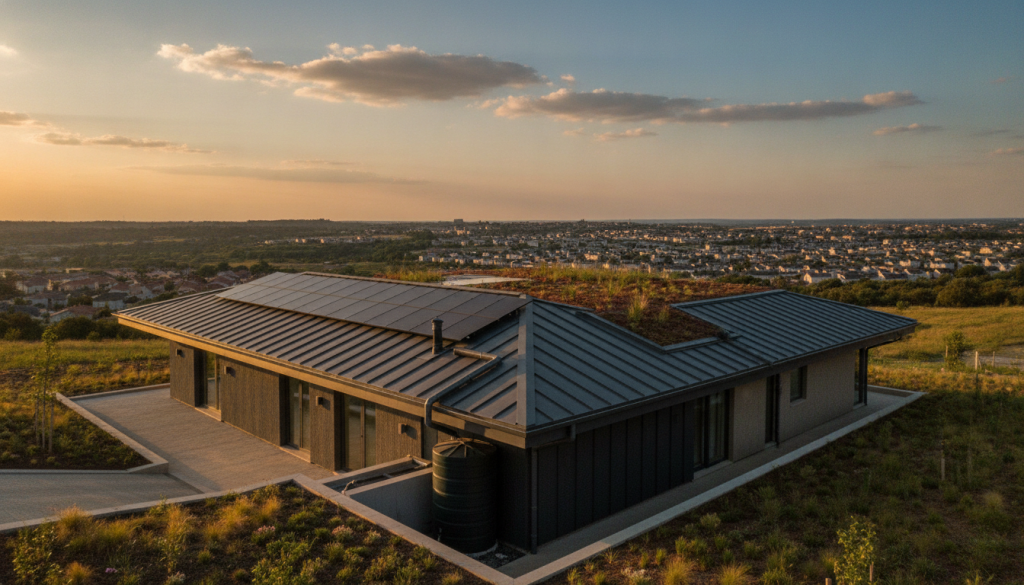
For those looking at a 40- to 60-year horizon, metal roofing systems offer an unparalleled ROI. Although the upfront cost can be double or triple that of asphalt, the longevity and minimal maintenance requirements often make it the cheaper option over time. Metal roofs are also highly reflective, reducing cooling costs by as much as 25%. When property owners calculate the ‘cost per year,’ metal frequently emerges as the winner, especially when considering that it can often be installed over existing shingles, saving on labor and disposal fees.
Flat Roofing Systems: TPO vs. EPDM
In commercial settings, the choice between Thermoplastic Polyolefin (TPO) and Ethylene Propylene Diene Terpolymer (EPDM) is critical. TPO is favored for its heat-reflective properties and seam strength, which is vital for reducing energy loads in warmer climates. EPDM, a synthetic rubber, is known for its durability in colder climates and its resistance to hail. The decision here should be driven by local climate data; choosing the wrong membrane for the specific environment can lead to premature degradation and thousands of dollars in wasted energy and repair costs.
Preventative Maintenance: The Difference Between Repair and Replacement
The most expensive roof is the one that is ignored. Statistics from the National Roofing Contractors Association (NRCA) indicate that a roof that is professionally maintained will last up to 50% longer than one that is not. The Roofing Decisions That Save Property Owners Thousands Over Time must include a commitment to a formal maintenance program.
The Economics of the Bi-Annual Inspection
A bi-annual inspection (Spring and Fall) typically costs a few hundred dollars but can prevent failures costing tens of thousands. During these inspections, professionals look for ‘silent killers’ like clogged internal drains, failing sealant at penetrations, and minor wind damage. By catching a small leak before it saturates the underlying insulation, an owner avoids the massive expense of a full tear-off. Once insulation is saturated, it loses its R-value and becomes a breeding ground for mold, necessitating a much more invasive and expensive remediation process.
Addressing Flashing and Sealant Failures
Over 90% of roof leaks occur at the flashing—the points where the roof meets a wall, chimney, or vent. Sealants naturally degrade due to UV exposure and thermal expansion. A proactive decision to scrape and reseal these areas every five to seven years is a low-cost intervention that prevents catastrophic water intrusion into the building’s structural envelope.
Optimizing Energy Efficiency and Thermal Performance
A roof is not just a shield against rain; it is a critical component of the building’s thermal envelope. Decisions regarding insulation and ventilation have a direct impact on the property’s monthly utility bills and the lifespan of the roofing materials themselves.
Cool Roof Technology and Emissivity
Modern roofing technology allows for ‘cool roofs’ that stay significantly cooler than traditional surfaces. This is achieved through high solar reflectance (reflecting sunlight) and high thermal emittance (releasing absorbed heat). In urban heat islands, a cool roof can reduce the peak cooling demand by 15%. For a large multi-family or commercial building, this translates to thousands of dollars in annual energy savings. Furthermore, lower roof temperatures reduce the ‘thermal shock’ the roof undergoes during rapid temperature changes, which preserves the elasticity of the materials and prevents cracking.
The Importance of Attic Ventilation
In residential and sloped-roof properties, proper ventilation is essential. An improperly ventilated attic can reach temperatures exceeding 150 degrees Fahrenheit. This excessive heat literally ‘cooks’ the shingles from the inside out, causing them to become brittle and lose their granules prematurely. Additionally, in winter, poor ventilation leads to ice dams. Ice dams occur when heat escapes into the attic, melts snow on the roof, and then refreezes at the eaves, forcing water under the shingles. The cost of repairing interior water damage from ice dams can easily exceed $5,000 per incident. Investing in a balanced intake and exhaust ventilation system is a one-time cost that protects the entire structure.
Choosing the Right Contractor: Protecting Your Warranty
Perhaps the most critical decision is who installs the system. A high-quality material installed poorly will fail faster than a mediocre material installed perfectly. Property owners often fall into the trap of choosing the lowest bidder, only to find that the contractor lacks proper insurance or is not ‘manufacturer certified.’
The Value of Manufacturer Certification
Major manufacturers like GAF, Owens Corning, or CertainTeed offer enhanced warranties that cover both materials and labor for up to 25 or 50 years. However, these warranties are only available if the roof is installed by a certified ‘Master’ or ‘Platinum’ contractor. These contractors are vetted for financial stability and installation expertise. While their bids may be 10% higher, the ‘peace of mind’ and the long-term warranty protection are worth far more than the initial savings. If a roof fails due to installation errors and the contractor has gone out of business, the property owner is left with the full bill unless they have a manufacturer-backed labor warranty.
The Financial Impact of Insurance and Tax Incentives
Smart roofing decisions also involve leveraging financial instruments and government incentives. In the United States, the Tax Cuts and Jobs Act of 2017 expanded Section 179, allowing many commercial property owners to deduct the full cost of a roof replacement in the year it was completed, rather than depreciating it over 39 years. This can result in a massive tax shield, effectively reducing the net cost of the roof by the owner’s marginal tax rate.
On the insurance side, many carriers offer ‘roof year’ discounts. As a roof ages, the risk of a claim increases, and premiums rise. By documenting a full replacement with impact-resistant materials, owners can often negotiate a 10-20% reduction in their annual property insurance premiums. Over a decade, these savings can pay for a significant portion of the roof’s initial cost.
Frequently Asked Questions
How much can I actually save by choosing a metal roof over asphalt?
While a metal roof may cost $15,000 more upfront for a standard home, it can last 50 years compared to an asphalt roof’s 20 years. When you factor in the avoided cost of a second asphalt replacement (which will be more expensive in the future due to inflation) and the 15-25% annual energy savings, the total savings over 50 years can exceed $40,000.
Does a roof inspection really prevent leaks?
A roof inspection does not stop rain, but it identifies vulnerabilities. By finding a cracked boot around a pipe or a loose piece of flashing before a storm, you prevent the water from entering the building. Prevention is always cheaper than restoration and mold remediation.
What is the most common mistake property owners make?
The most common mistake is waiting for a leak to appear before taking action. By the time a leak is visible on the ceiling, the internal structure, insulation, and decking have likely been compromised, significantly increasing the repair or replacement cost.
Are ‘Cool Roofs’ effective in cold climates?
While ‘Cool Roofs’ provide the most benefit in warm climates, they are still effective in many temperate zones. However, in very cold climates, the ‘heating penalty’ (losing the heat gain from a dark roof in winter) must be weighed against the summer cooling savings. A professional energy audit can help determine the best color for your specific region.
How do I know if my contractor is properly insured?
You should always request a Certificate of Insurance (COI) sent directly from the contractor’s insurance agent to you. This ensures the policy is active and specifically covers ‘Roofing,’ which is a high-risk category that many general liability policies exclude.
Conclusion
The Roofing Decisions That Save Property Owners Thousands Over Time are rooted in a long-term perspective. By prioritizing high-quality materials, investing in professional installation, and committing to a rigorous maintenance schedule, property owners can drastically reduce the lifecycle cost of their roofing systems. Furthermore, by taking advantage of energy-efficient technologies, tax incentives, and insurance discounts, the roof becomes a strategic component of a property’s financial success. In the world of real estate, the most expensive roof is not the one with the highest price tag—it is the one that fails prematurely due to poor planning and neglect. Take control of your roofing assets today to ensure a more profitable and secure tomorrow.